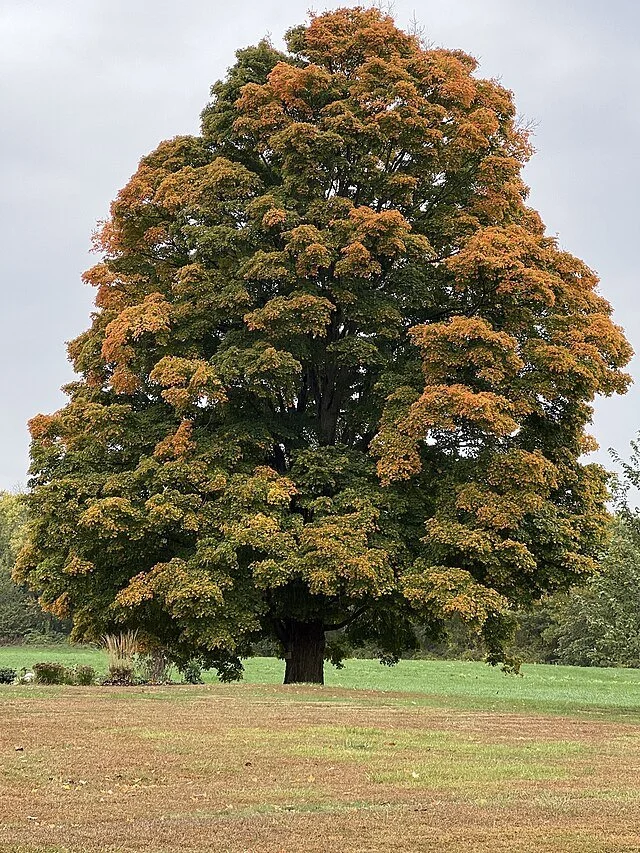
Acer saccharum - Sugar Maple
Quick Facts
Type: Tree
Native Range: Eastern North America
Native Status in NY: Native
Sun: Full Sun to Part Shade
Soil: Medium to Moist, Well-Drained
Height: 60–80 ft
Bloom Time: March–April (flowers)
Flower Color: Greenish-Yellow
Spacing: 25–40 ft
Deer Resistance: Moderate
Pollinator Value: Moderate (early-season nectar)
Description
Sugar Maple is a native deciduous tree with a rounded, dense canopy and smooth gray bark that matures to darker, fissured bark. Its small greenish-yellow flowers appear in early spring, attracting early pollinators before leaf emergence. The tree produces winged seeds (samaras) that feed birds and small mammals. Sugar Maple is widely recognized for its brilliant orange to red fall foliage and its importance as a food and habitat source for wildlife. It thrives in rich, well-drained soils and is ideal for native plant gardens, woodlands, and shade plantings.
Ecological Benefits 🐝
Wildlife Value
Provides early-season nectar for pollinators
Seeds (samaras) feed birds and small mammals
Supports beneficial insects
Provides canopy and shade for wildlife
Adds structure to woodland ecosystems
Known Associations
Bumblebees (early flowers)
Sweat bees
Leafcutter bees
Songbirds (finches, sparrows)
Squirrels and chipmunks (seeds)
Beneficial insects
Garden Uses
Native plant gardens
Woodland gardens
Shade tree for yards and parks
Wildlife-supportive plantings
Urban and suburban landscaping
Rain gardens with good drainage
Why We Grow It
We grow Sugar Maple because it is an iconic native tree that provides early nectar for pollinators, food for wildlife, and brilliant fall color. Its adaptability to sun and shade and importance to native ecosystems make it an excellent choice for New York landscapes.